
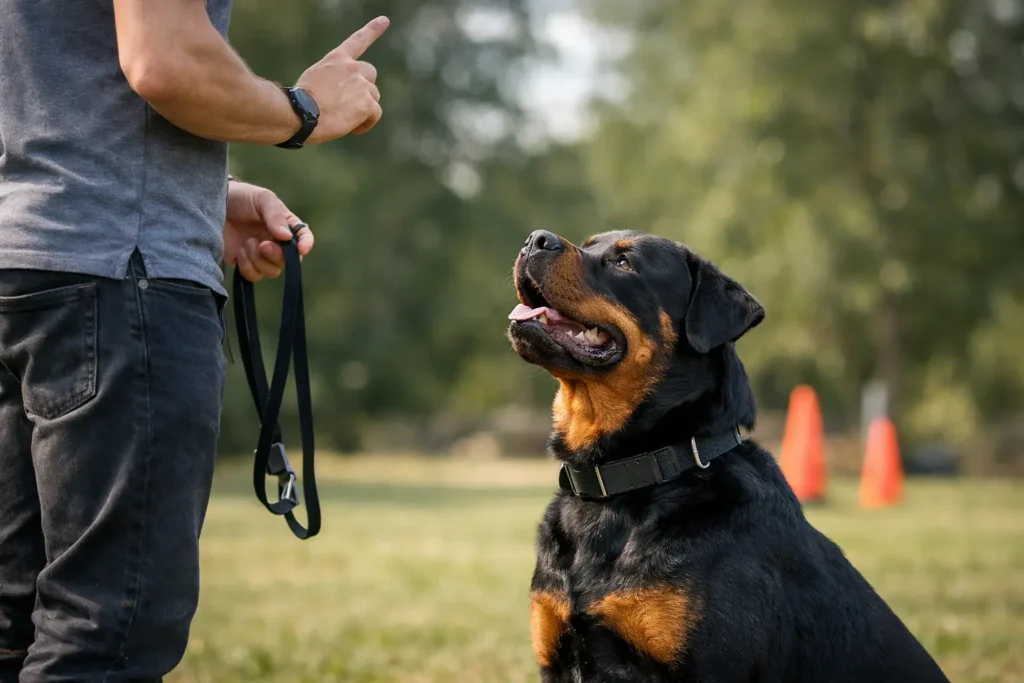
A Rottweiler can learn an impressive amount quickly. The same intelligence, confidence, and physical presence that make the breed so compelling also mean that Rottweiler training cannot be postponed until a puppy is large enough to be difficult. The goal is not to make a Rottweiler less powerful or less spirited. It is to teach that dog how to use those qualities with control, confidence, and respect for the people who trust it.
For families bringing home a carefully bred puppy, training begins the first day. A stable temperament and thoughtful breeding give a puppy an excellent foundation, but consistent guidance is what turns potential into a dependable companion. The standards taught at 10 weeks are far easier to maintain than habits corrected at 10 months.
Rottweiler Training Starts With Clear Household Rules
Rottweilers do best when expectations are calm, consistent, and easy to understand. Every person in the home should use the same cues and honor the same boundaries. If jumping on the sofa is allowed sometimes, pulling toward visitors is tolerated on weekends, or a puppy receives attention after barking, the dog receives mixed information.
Decide early where the puppy will sleep, which rooms are open, whether furniture is permitted, how greetings will happen, and what behavior earns access to doors, food, play, and people. This is not about being harsh or trying to “dominate” a dog. It is about creating a predictable structure. A well-bred Rottweiler is often eager to work with its family, but it needs that family to be clear.
Use short verbal cues, reward the correct response immediately, and avoid repeating commands over and over. Say “sit” once, guide the puppy if needed, then reward the completed behavior. Repeating a cue teaches a dog that the first several requests are optional.
A crate, exercise pen, and leash are management tools, not punishments. They help prevent rehearsals of unwanted behavior while the puppy is still learning. A puppy that cannot practice chewing table legs, charging the front door, or stealing children’s toys has fewer bad habits to undo later.
Build Engagement Before Demanding Obedience
Before expecting polished heelwork or a long stay, teach your Rottweiler puppy that paying attention to you is worthwhile. Use meals, praise, toys, and small training treats to build engagement. Call the puppy’s name, reward eye contact, and make coming toward you a positive experience.
Several short sessions each day are more productive than one long drill. Young puppies have limited attention spans, and training should feel like a rewarding conversation rather than a test. Two to five minutes of focused work before a meal or walk can produce meaningful progress.
Start with practical behaviors that will matter for the dog’s entire life: name response, recall, sit, down, stay, leave it, drop it, place, and polite leash walking. “Place” is especially valuable for a large family dog. It gives your Rottweiler a clear job during dinner, deliveries, children’s activities, or visits from friends.
Reward-based training does not mean allowing the dog to negotiate every request. It means showing the dog exactly which choices earn access to what it wants. A puppy that sits before the leash goes on, waits before going through a door, and checks in before greeting a guest is learning self-control in ordinary moments.
Teach Manners Before Size Becomes a Factor
A 15-pound puppy pulling toward a stranger may seem cute. An adult Rottweiler doing the same thing can feel intimidating, even when the dog is friendly. Do not wait for growth to address jumping, leash pulling, mouthing, or rushing through doors.
When your puppy pulls, stop moving rather than allowing the pull to reach its destination. When all four paws are on the ground, offer attention. When teeth touch skin during play, calmly end the interaction and redirect to an appropriate toy. The lesson is simple: calm behavior keeps good things happening.
Avoid physical corrections that create fear, conflict, or defensive behavior. Rottweilers are observant dogs, and poor handling can damage trust. Fair boundaries, good timing, and meaningful rewards are more reliable than trying to overpower a powerful breed.
Socialization Is More Than Meeting Everyone
A properly socialized Rottweiler is not expected to rush toward every person or dog with enthusiasm. The better goal is neutrality: the dog can notice a new sight, sound, animal, or person and remain responsive to its handler.
Expose your puppy gradually to the real situations it will encounter. That may include car rides, vacuum cleaners, slick floors, veterinary handling, people wearing hats, calm children, wheelchairs, livestock at a safe distance, and unfamiliar places. In the Pacific Northwest, that can also mean wet sidewalks, busy trailheads, coffee-shop patios, and the sounds of city traffic.
Quality matters more than quantity. A crowded dog park is not a requirement for socialization and can be a poor choice for many puppies. Uncontrolled interactions may teach rough play, frustration, or fear. Instead, arrange calm meetings with healthy, socially appropriate dogs and ask visitors to let the puppy approach at its own pace.
Watch body language. A puppy that freezes, tucks its tail, avoids eye contact, or becomes excessively vocal needs more distance and a slower introduction. Confidence grows through successful experiences, not forced exposure. Pair new environments with food, play, and calm encouragement, then leave before the puppy becomes overwhelmed.
Leash Skills and Recall Are Safety Skills
For a strong adult dog, loose-leash walking is not optional. Begin in a quiet area with minimal distractions. Reward the puppy for walking near your side and checking in voluntarily. Change direction before the leash becomes tight, and make following you the easiest, most rewarding choice.
Do not rely on a retractable leash while teaching foundation skills. It often gives a young dog practice pulling and creates inconsistent distance rules. A standard leash and properly fitted collar or harness give you better communication and control.
Recall deserves the same attention. Never call your Rottweiler only for baths, nail trims, the end of play, or other things the dog dislikes. Practice the cue frequently in easy settings, reward generously, and sometimes release the puppy to play again. Your dog should learn that coming to you is always the safest and smartest decision.
As distractions increase, use a long line in a secure area. Proofing recall around squirrels, other dogs, children playing, or exciting smells takes time. A reliable recall is built through hundreds of successful repetitions, not through one dramatic test at an off-leash park.
Adolescence Requires More Patience, Not Less Structure
Many owners feel confident during the early puppy months, then are surprised when an adolescent Rottweiler becomes distracted, pushy, or selectively forgetful. This stage is normal. Your dog is growing rapidly, testing familiar patterns, and learning how to manage more energy and confidence.
Do not abandon rules because training seems temporarily uneven. Return to easier versions of known exercises, reduce distractions, and reward generously for compliance. Keep greetings controlled, continue supervised social exposure, and make sure the dog has appropriate outlets for physical activity and mental work.
Exercise should be age-appropriate. Young Rottweilers need play, training, exploration, and controlled movement, but their developing joints should not be asked to handle repetitive high-impact exercise or forced distance running. Your veterinarian and a qualified trainer can help tailor an activity plan to the individual dog.
Mental work matters just as much. Food puzzles, scent games, obedience practice, structured tug, and learning new skills can satisfy a thoughtful working breed without simply increasing physical intensity. A tired dog is not always a trained dog. A dog with practiced self-control is easier to live with.
When Professional Support Is Worth It
A professional trainer is an investment in safety and clarity, particularly for first-time Rottweiler owners or households with children. Look for someone experienced with large guardian and working breeds who can explain their methods, involve the entire family, and help you practice skills in the environments where you need them.
Group puppy classes can be useful when they are well managed and focused on confidence, handler engagement, and controlled exposure. Private lessons may be the better fit for a shy puppy, a busy household, or specific concerns such as leash reactivity, resource guarding, or fear. Serious behavior concerns should be addressed early with a qualified professional and, when appropriate, your veterinarian.
At King Rottweilers, we believe responsible placement includes preparing families for the commitment after the puppy goes home. Champion pedigrees, health testing, and sound temperaments provide an exceptional starting point, but a Rottweiler becomes a trusted family companion through daily leadership, patient repetition, and a relationship built on fairness.
The most rewarding moment in training is rarely a perfect sit for a treat. It is seeing your Rottweiler calmly choose to look to you when life gets busy – at the front door, on a trail, around children, or in a new place. Build that habit one clear, successful interaction at a time.